Characteristics of Dominican Marímbula musical instruments
Introduction
The marímbula is a fundamental percussion instrument within the musical landscape of the Dominican Republic and the wider Caribbean. Often described as a “thumb piano” or a large box zither, it serves as a rhythmic and harmonic foundation in many traditional folk genres. Its primary purpose is to provide a deep, resonant bassline that drives the tempo and structure of communal music, making it an essential element in celebrations, street performances, and cultural gatherings.
Understanding the marímbula is crucial for anyone interested in Afro-Caribbean musicology. This instrument represents a unique convergence of African musical roots and Caribbean ingenuity, utilizing simple materials to produce complex, earthy tones. Because it functions as both a melodic and rhythmic driver, it bridges the gap between percussion and string instruments, offering a versatile sound that is both percussive and harmonic in nature.
Physical construction and design

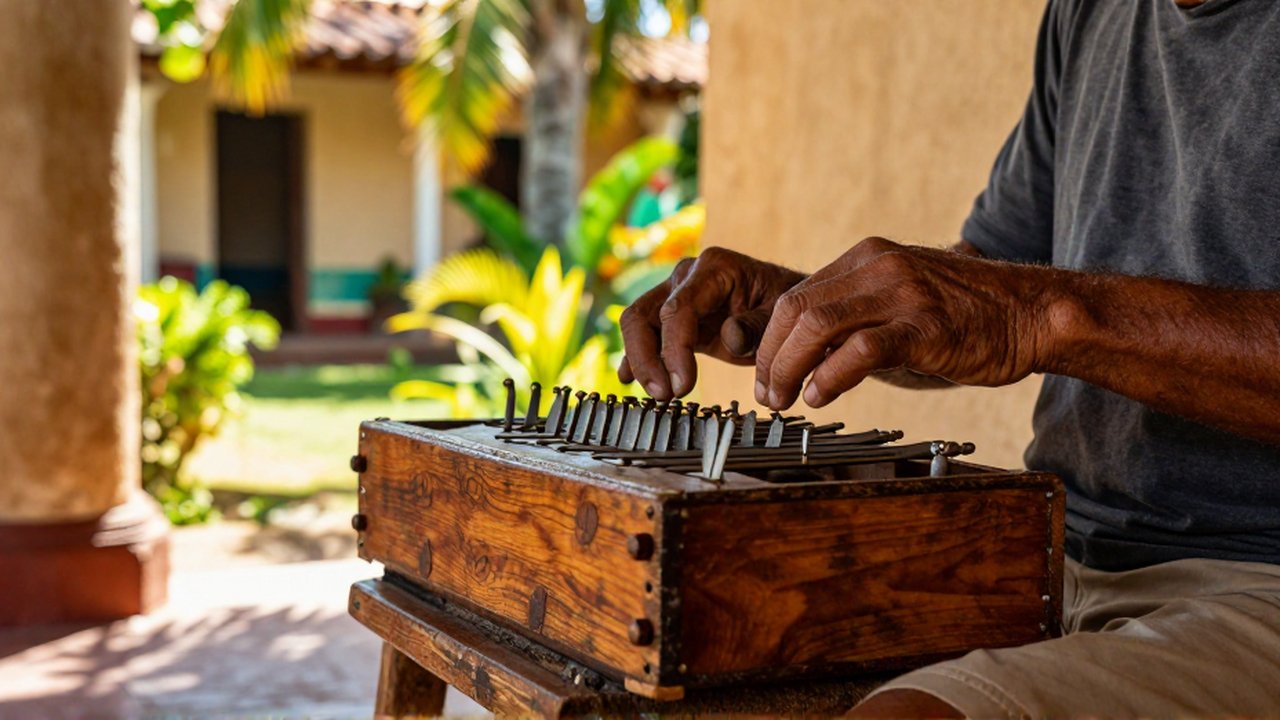
The structure of a Dominican marímbula is characterized by its simplicity and the use of organic or recycled materials. At its core, the instrument consists of a large, hollow sound box, which can be made of wood or, in more modern and improvised versions, metal. This resonator is the most critical component for sound projection, as it amplifies the vibrations produced by the playing mechanism.
Attached to the top of this sound box are several metal strips or tongues of varying lengths. These strips are the “strings” of the instrument, though they are fixed to the body rather than being stretched across it. The length and thickness of these metal tongues determine the pitch; longer, thicker strips produce deep, low-frequency notes, while shorter strips produce higher tones. The player interacts directly with these metal elements to elicit sound.
Sound production and playing technique
Playing the marímbula requires a specific tactile approach that distinguishes it from other plucked instruments. The musician sits with the instrument resting on their lap or on the ground. To produce sound, the player uses their thumbs to pluck or strike the metal tongues. This technique allows for a rhythmic “thumping” sensation that is central to the instrument’s character.
A key aspect of the marímbula’s sound is its percussive resonance. Because the thumbs strike the metal while it is in contact with a resonator, the sound is not just a note but a rhythmic pulse. Skilled players can vary the intensity of their thumb strikes to create different textures, ranging from soft, melodic basslines to loud, driving rhythmic patterns that can lead an entire ensemble.
Musical role in Dominican traditions

In the context of Dominican folk music, the marímbula acts as the heartbeat of the rhythm section. It is frequently used in genres that rely on strong, syncopated beats. Because it provides both the bass note and the rhythmic strike simultaneously, it allows small groups of musicians to create a “full” sound without needing a large orchestra or a complex drum kit.
The instrument is particularly prominent in:
- Street festivities: Where its loud, resonant qualities allow it to be heard in open-air environments.
- Folk ensembles: Where it complements guitars, percussion, and vocalists by anchoring the harmonic progression.
- Rhythmic training: Used as a teaching tool to understand the relationship between pitch and tempo.
Comparison with similar instruments
While the marímbula shares some conceptual similarities with other instruments, its specific construction and role set it apart. It is often compared to the African kalimba or mbira, but those are typically much smaller, handheld, and produce higher, more delicate tones. The marímbula is a much larger, bass-oriented instrument designed for volume and grounding a rhythm.
| Feature | Marímbula | Kalimba/Mbira |
|---|---|---|
| Primary Pitch Range | Low (Bass) | High (Melodic) |
| Size | Large (Lap/Floor) | Small (Handheld) |
| Resonance Type | Large hollow box | Small metal/wood box |
| Musical Function | Rhythmic/Bass foundation | Melodic ornamentation |
Frequently Asked Questions
How is the pitch of a marímbula changed? The pitch is determined by the length and thickness of the metal tongues. To adjust the tuning, the strips must be physically modified or replaced, as they are fixed to the sound box.
Can the marímbula be played with mallets? While the traditional and most common method is using the thumbs, some experimental players may use soft mallets to achieve different percussive textures, though this deviates from the standard folk technique.
Is the marímbula a melodic or percussion instrument? It is considered both. It is percussion because it is played with a striking motion, but it is also melodic/harmonic because the different lengths of metal produce specific musical notes.


Post Comment