Essential watercolor supplies for every new artist
Introduction
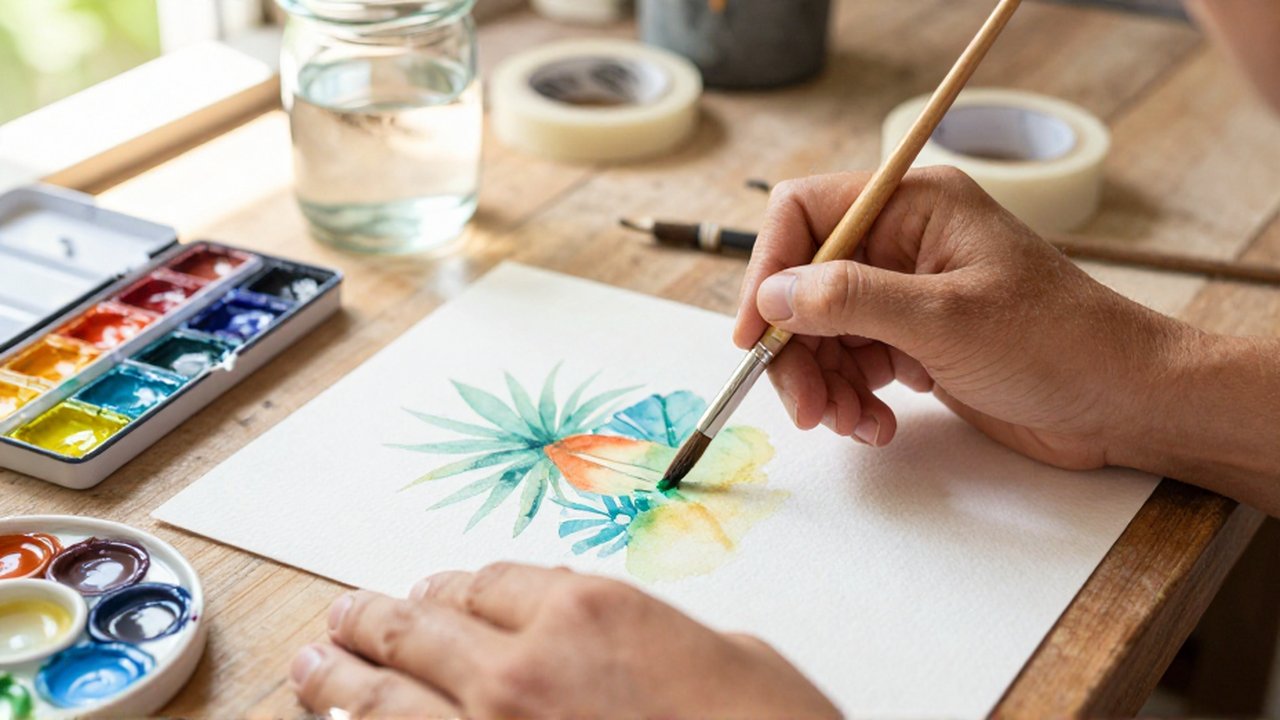
Watercolor painting is a unique medium characterized by its transparency, fluidity, and the way light interacts with thin layers of pigment. Unlike oil or acrylic painting, where color is built up through opacity, watercolor relies on the white of the paper to provide luminosity. For a new artist, understanding the specific tools required is the first step toward mastering this delicate balance of water and pigment. Selecting the right supplies ensures that the medium behaves predictably, allowing for the beautiful washes and subtle gradients that make watercolor so captivating.
Investing in quality gear from the beginning can prevent many common frustrations. While it is tempting to purchase the cheapest options available, low-quality materials often lack the pigment density or paper texture necessary to achieve professional results. This guide is designed to help beginners navigate the essential kit, focusing on the core components that will support a steady learning process and help develop foundational skills in this expressive art form.
Choosing the right watercolor paints
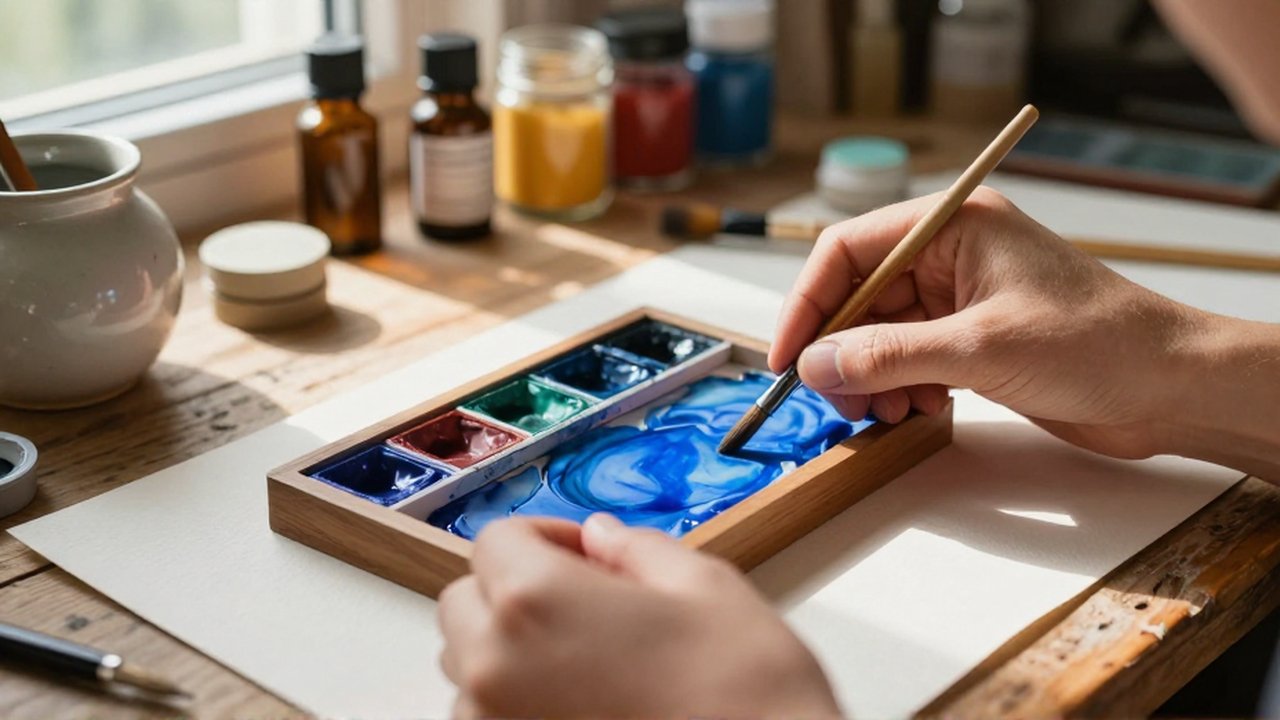
The quality of your pigment is the most significant factor in your success. Watercolor paints generally come in two forms: pans and tubes. Pans are solid, dried cakes of pigment often found in compact sets, making them highly portable and easy for beginners to control. Tubes provide a creamy, wet consistency, which is ideal for mixing larger quantities of color or creating highly saturated washes.
When selecting your first set, consider the following criteria:
- Pigment Concentration: Look for “artist grade” or “student grade” labels. Student grade is more affordable and perfect for practice, while artist grade offers higher pigment loads and better lightfastness.
- Color Range: A basic set should include a mix of primaries (red, blue, yellow) along with earth tones like ochre or burnt sienna. This allows you to learn color mixing accurately.
- Transparency vs. Opacity: Some pigments are naturally transparent, while others are more opaque. A good starter set should offer a variety of both to allow for different layering techniques.
Selecting the best paper for watercolor
In watercolor painting, the paper is just as important as the paint itself. Because the medium requires significant amounts of water, using standard drawing paper will result in buckling, tearing, or uneven absorption. Watercolor paper is specifically engineered to handle moisture and control how the pigment settles into the fibers.
There are three main types of watercolor paper surfaces to consider:
- Cold Pressed: This is the most popular choice for beginners. It has a slight texture (often called “tooth”) that helps hold water and pigment, making it versatile for various techniques.
- Hot Pressed: This paper is very smooth. While it allows for fine detail, it can be challenging for beginners because the water tends to sit on the surface rather than soaking in, making it harder to control washes.
- Rough: This paper has a heavy, noticeable texture. It is excellent for expressive, atmospheric landscape paintings but is difficult to use for fine, intricate details.
Additionally, pay attention to the weight of the paper. A weight of 300 gsm (140 lb) is the standard recommendation, as it is thick enough to prevent excessive warping when wet.
Essential brushes and tools
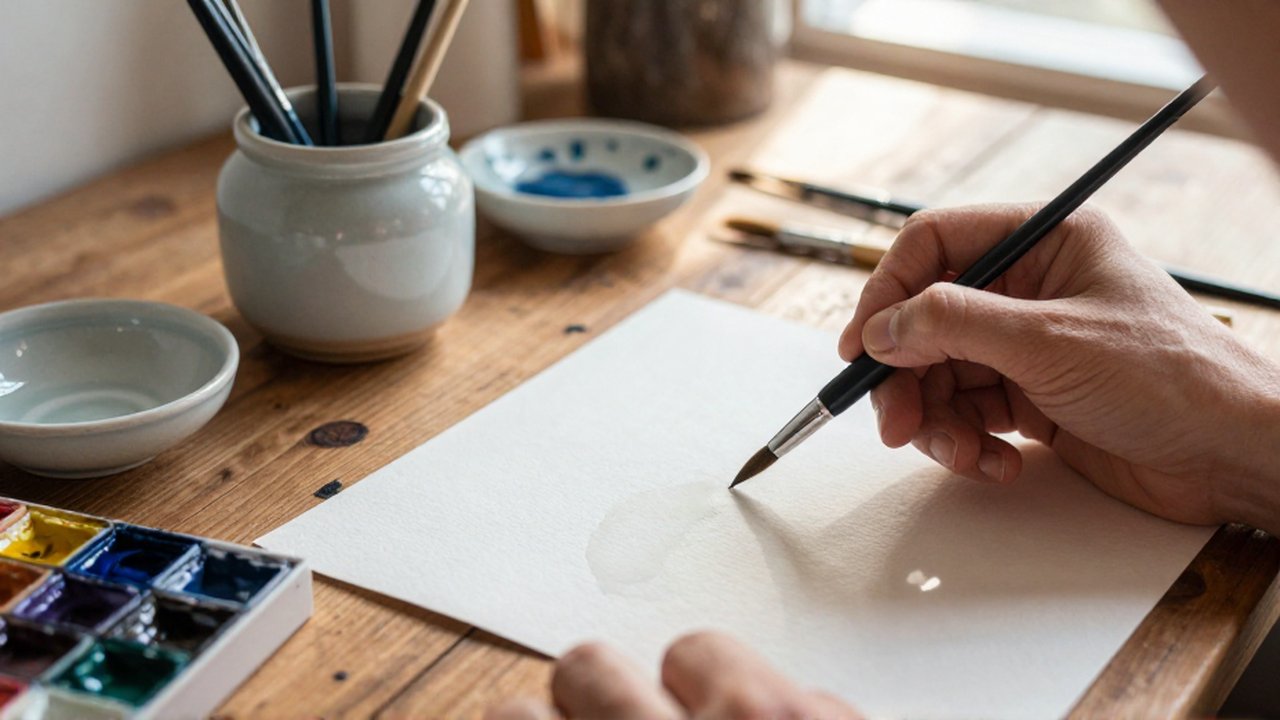
Brushes are the vehicle through which you apply paint and water to the paper. For a beginner, you do not need a massive collection of brushes; instead, focus on a few versatile shapes made of high-quality synthetic or natural hair. Synthetic brushes are often preferred for beginners because they are durable, hold their shape well, and are relatively inexpensive.
A foundational brush kit should typically include:
- Round Brushes: These are the most versatile. A medium-sized round brush can handle both broad washes and fine detail work by simply varying the pressure applied.
- Flat Brushes: These are useful for covering large areas of the paper quickly or creating sharp, straight edges in washes.
- Wash Brushes: Larger, softer brushes designed to move large amounts of water and diluted paint across the page.
Beyond brushes, you will need a clean container for water. It is highly recommended to use two jars: one for rinsing dirty pigment off your brush and a second, clean jar for dipping into fresh water to mix new colors.
Necessary accessories for a functional workspace
To maintain a clean and productive environment, several small accessories are necessary to supplement your main supplies. Having these tools on hand prevents the interruption of your creative flow and helps maintain the quality of your work.
Organizing your workspace with these items will improve your technique:
- Mixing Palette: You need a surface to dilute your paint and mix colors. Many pan sets come with a built-in lid that serves as a palette, but a separate ceramic or plastic palette offers more space.
- Paper Towels or Sponges: These are vital for “lifting” excess water or pigment from the paper, correcting mistakes, or controlling the moisture level of your brush.
- Masking Fluid: This is a liquid latex used to protect areas of the paper that you want to remain pure white. Once the paint is dry, the fluid can be peeled away.
- Pencils and Erasers: A hard lead pencil (such as an H or HB) is best for sketching initial compositions without leaving heavy graphite marks that might smudge into the watercolor.
Frequently asked questions
Is it better to buy a large set or individual colors? For absolute beginners, a mid-range set of 12 to 24 colors is usually more efficient. It provides a balanced range of hues without the high cost of buying individual tubes. As you progress, you may find yourself buying specific professional pigments to supplement your set.
How can I tell if my paper is high quality? The most reliable indicator is the weight and the material. Look for 300 gsm (140 lb) weight and, if possible, cotton-based paper. While wood pulp paper is more affordable, cotton paper absorbs water more evenly and is much more forgiving for learners.
Do I need expensive brushes to start? No, you do not need professional-grade sable brushes immediately. High-quality synthetic brushes are excellent for learning. They offer the necessary spring and water retention required to practice fundamental strokes without a massive financial investment.
Why does my paper buckle when I paint? Buckling occurs when the paper absorbs water faster than it can dry, causing the fibers to expand. To prevent this, ensure you are using heavy-weight watercolor paper (at least 300 gsm) and consider taping the edges of your paper to a drawing board to keep it taut.


Post Comment