Differences between Caribbean and European woodworking styles
Introduction
Woodworking serves as a profound expression of cultural identity, acting as a bridge between raw natural resources and human artistry. Understanding the differences between Caribbean and European woodworking styles is essential for historians, collectors, and artisans who wish to appreciate how geography and climate dictate the evolution of craft. These styles do not merely differ in appearance; they reflect divergent philosophies of utility, social structure, and resource availability that have shaped craftsmanship over centuries.
While European traditions often emphasize permanence, rigid structure, and intricate ornamentation, Caribbean woodworking is a testament to adaptation and the creative use of tropical biodiversity. By examining these two distinct approaches, one can see how the same fundamental tool can produce vastly different outcomes based on the wood species available and the environment in which the craftsman lives. This distinction is vital for recognizing the soul of an object, whether it is a heavy oak cabinet from a northern climate or a vibrant mahogany carving from the islands.
Material selection and environmental influence

The most immediate difference between these two traditions lies in the raw materials used. European woodworking has historically been defined by temperate forests, providing access to dense, stable hardwoods like oak, beech, walnut, and ash. These woods are prized for their structural integrity and their ability to hold fine, precise details over long periods in relatively stable, cooler climates.
In contrast, Caribbean woodworking is defined by the abundance of tropical hardwoods. Craftsmen in the Caribbean have long utilized species such as mahogany, cedar, rosewood, and ebony. These woods are often characterized by their rich, deep colors and striking grain patterns. However, the tropical environment presents unique challenges, such as high humidity and intense sun, which influence how the wood is treated and finished. While European styles often use heavy waxes or thick varnishes to protect against dryness, Caribbean styles focus on preserving the natural luster and breathability of the tropical grain.
Design philosophies and aesthetic goals
The aesthetic goals of European and Caribbean woodworking often diverge based on historical social functions. European styles frequently lean toward formalism and symmetry. From the baroque flourishes to the disciplined lines of neoclassical furniture, there is a strong emphasis on architectural precision and the demonstration of technical mastery through complex joinery and inlay work.
Caribbean woodworking, while influenced by colonial patterns, evolved into a unique vernacular style that prioritizes fluidity and organic forms. There is a greater emphasis on the natural beauty of the wood itself rather than covering it with excessive ornamentation. You will often find a sense of lightness in Caribbean pieces—designed for airflow and comfort in warm climates—whereas European pieces are often built to be heavy, imposing, and insulating. The Caribbean style often incorporates local motifs, reflecting a blend of African, Indigenous, and European influences that result in a more rhythmic and expressive visual language.
Construction techniques and joinery approaches

The technical execution of these styles reveals how craftsmen respond to the physical properties of their wood. European woodworking is famous for its highly sophisticated joinery, such as intricate dovetails, mortise and tenon joints, and complex veneering. These techniques are designed to create pieces that are incredibly durable and capable of resisting the seasonal expansion and contraction common in temperate zones.
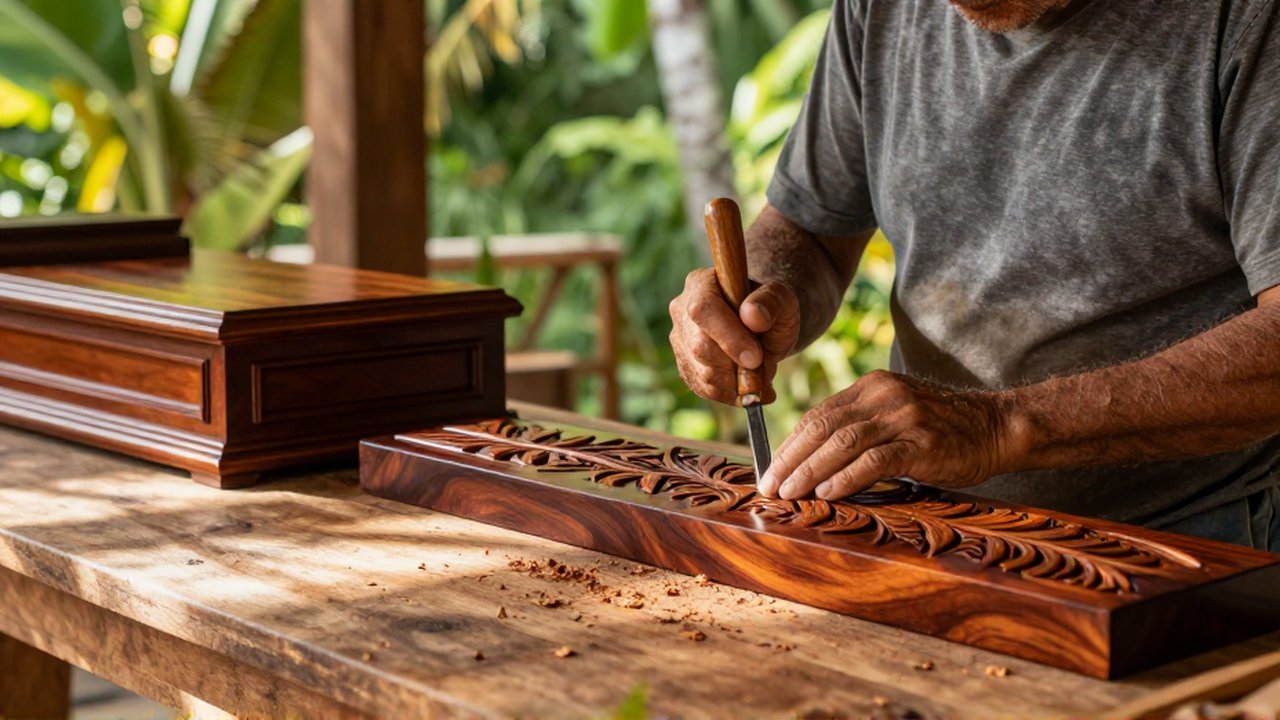
Caribbean craftsmanship often utilizes techniques that are more adaptable to the “movement” of tropical hardwoods. Because tropical woods can react significantly to humidity, Caribbean artisans often employ joinery that allows for some flexibility. Additionally, there is a strong tradition of hand-carving in the Caribbean, where the artisan works directly with the grain to create sculptural elements that feel integrated into the object rather than applied to its surface.
| Feature | European Woodworking | Caribbean Woodworking |
|---|---|---|
| Primary Woods | Oak, Walnut, Beech, Ash | Mahogany, Cedar, Ebony, Rosewood |
| Climate Context | Temperate, stable, seasonal | Tropical, humid, high heat |
| Aesthetic Focus | Symmetry, formal detail, ornamentation | Organic forms, grain expression, lightness |
| Typical Build | Heavy, dense, structural permanence | Versatile, adaptable, breathable |
Common mistakes in identifying styles
A frequent error in distinguishing these styles is assuming that any dark-colored wood is necessarily Caribbean or that any highly ornate piece is European. It is important to look at the structural logic of the piece. A European piece will often follow strict geometric rules, even when it is highly decorated. A Caribbean piece may appear simple in structure but will often reveal its complexity through the way the grain is utilized or the specific way a curve is carved.
Another mistake is overlooking the impact of climate on the joinery. If a piece of furniture was built in Europe but moved to the Caribbean without being properly acclimated, the joinery may fail. Therefore, the way a piece handles “movement” is a key indicator of its intended origin and the skill of the maker in accounting for its environment.
Frequently asked questions
Does Caribbean woodworking always use tropical woods? While many iconic pieces use mahogany or cedar, Caribbean artisans also use various local softwoods and hardwoods depending on the specific island and the intended use of the object.
Is European woodworking more durable than Caribbean woodworking? Durability is relative to the environment. European furniture is built to withstand dry, seasonal shifts, while Caribbean furniture is crafted to remain stable in high humidity. A piece not designed for its specific climate may lose durability quickly.
How can I tell if a piece is handmade or mass-produced? In both traditions, look for slight irregularities in joinery and the flow of the grain. Hand-carved Caribbean pieces often show a unique “hand” in the curves, whereas European traditional styles show highly disciplined, repetitive precision.
Can these two styles be blended? Yes, modern woodworking often blends these traditions, using European joinery techniques on tropical hardwoods to create contemporary pieces that respect both structural precision and organic beauty.



Post Comment