Famous costumes used in Dominican folk dance performances

Introduction
Dominican folk dance is a vibrant expression of the nation’s complex history, blending African, Spanish, and Taíno influences into a rhythmic spectacle. The costumes worn during these performances are far more than mere clothing; they are essential storytelling tools that convey social status, historical eras, and the spiritual essence of the dance. By wearing specific garments, performers honor the ancestors and preserve the cultural identity of the Caribbean.
Understanding these traditional outfits is crucial for anyone interested in the visual heritage of the Dominican Republic. Each costume is meticulously designed to complement the movements of the dancers, such as the swirling of skirts in Merengue Folklórico or the rhythmic stomping in Guloyas. These attire choices serve to transform a simple dance into a living historical reenactment, allowing the audience to witness the evolution of Dominican society through color, texture, and form.
Essential attire for Merengue Folklórico

Merengue Folklórico is perhaps the most iconic representation of Dominican heritage. The costumes used in this dance style are designed to reflect the rural, agrarian roots of the genre, often portraying the idealized life of the “campesino” (countryside dweller). The clothing emphasizes elegance, simplicity, and a sense of festive celebration.
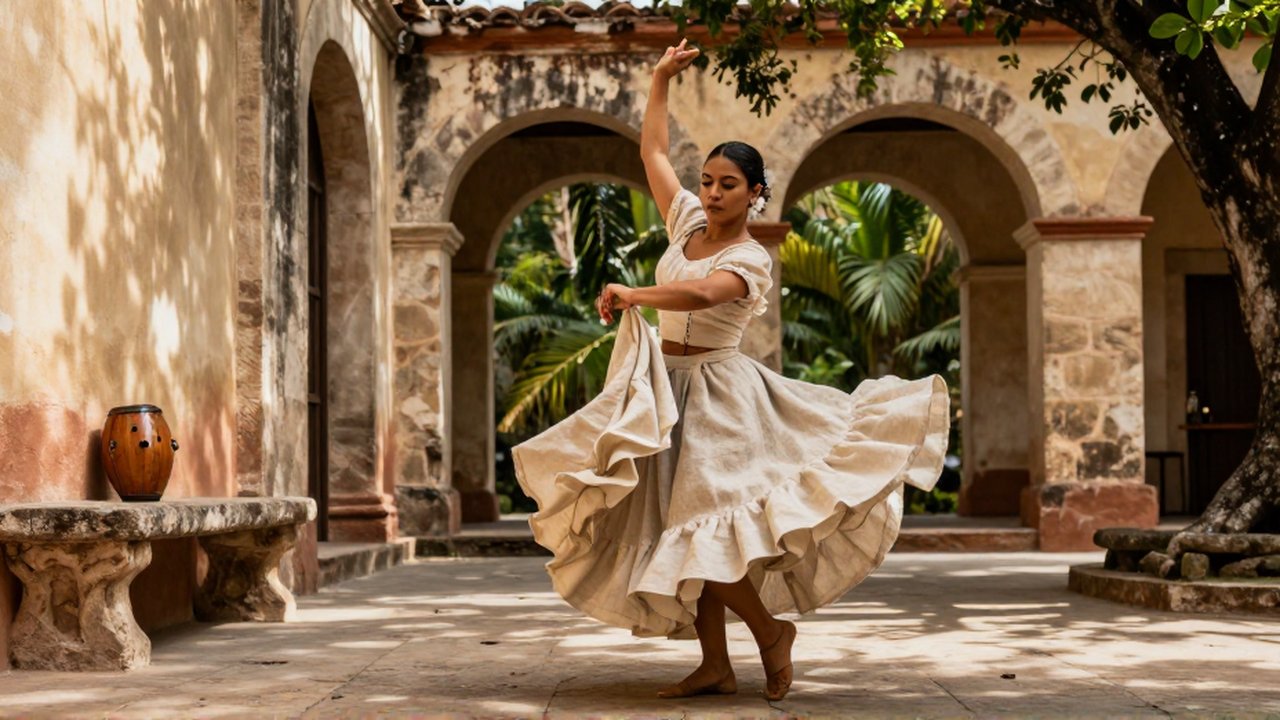
For women, the traditional ensemble typically consists of a wide, voluminous skirt made of lightweight cotton or lace. These skirts are often adorned with bright colors, floral patterns, or ruffles that accentuate the dancer’s hip movements. This is paired with a fitted blouse, frequently featuring off-the-shoulder designs or lace detailing. To complete the look, dancers often wear small flowers in their hair and modest jewelry, projecting an image of grace and femininity.
Men’s costumes are designed to reflect the traditional agrarian masculinity of the colonial and post-colonial eras. The standard outfit includes a white linen or cotton shirt and trousers, which provide a clean, sharp contrast to the colorful women’s skirts. Often, a straw hat (sombrero) and a traditional handkerchief are used as props. The simplicity of the male attire ensures that the focus remains on the rhythmic footwork and the coordinated interaction between the dance partners.
Symbolic clothing in Guloya performances
The Guloyas are a specific group of performers in San Pedro de Macorís whose dance and costumes are recognized as part of the Intangible Cultural Heritage of Humanity. Their attire is arguably the most elaborate and visually striking in the Dominican Republic, standing out due to its intense saturation and historical symbolism.
The Guloya costumes are characterized by a maximalist approach to color and decoration. Performers wear bright, multi-colored capes, heavily embellished with sequins, beads, and intricate embroidery. These garments are often layered over structured tunics. The use of vivid reds, yellows, and blues is not merely aesthetic; it represents the joy, vitality, and the complex fusion of ethnic identities that define the community.
Accessories play a vital role in the Guloya presentation. Elaborate headpieces, often adorned with feathers or metallic elements, add height and majesty to the dancers. The weight and shine of the costumes demand a specific type of disciplined movement, turning the dance into a regal procession. Because these costumes are often passed down or carefully maintained within specific families, they represent a living link to the community’s ancestral lineage.
Traditional garments for Congo dance

The Congo dance (Baile de Congos) is a deeply spiritual and rhythmic tradition rooted in African heritage, particularly prevalent in areas like Villa Mella. The costumes used in these performances are designed to evoke a sense of ritual, power, and connection to the drumbeat.
Unlike the festive brightness of Merengue, Congo attire often leans toward more organic and symbolic elements. Dancers may wear garments made of rougher fabrics or decorated with patterns that mimic traditional African motifs. The use of beads, shells, and even specific types of waist wraps can signify the dancer’s role within the ritual or their connection to the spiritual realm.
The movement in Congo dance is often percussive and grounded. Therefore, the clothing must allow for significant range of motion in the legs and torso. Torso coverings, waistbands, and even head wraps are common, serving to unify the group of performers. The aesthetics of Congo dress prioritize the communal identity of the dancers over individual ornamentation, creating a powerful, unified visual presence during ceremonies.
Comparison of Dominican folk dance styles
| Dance Style | Primary Visual Theme | Common Fabrics | Key Accessories |
|---|---|---|---|
| Merengue Folklórico | Rural elegance and festivity | Cotton, lace, light linen | Flowers, straw hats, handkerchiefs |
| Guloyas | Royal splendor and fusion | Sequined fabrics, heavy silks | Elaborate capes, beaded headpieces |
| Congo | Ritualistic and ancestral | Organic textures, patterned cloths | Shells, beads, waist wraps |
Frequently asked questions
Why are colors so important in Dominican folk dance costumes? Colors serve as a visual language. In Merengue, bright colors represent joy and life in the countryside; in Guloya performances, they represent the fusion of different cultures; and in religious or ritualistic dances, specific colors may hold spiritual significance.
Are these costumes worn for everyday celebrations? No, these specific traditional costumes are reserved for cultural performances, festivals, and official ceremonies. They are symbolic garments intended to distinguish a performance from everyday life.
How are the Guloya costumes maintained? Because Guloya costumes are highly valued cultural artifacts, they are often treated as family heirlooms. They require careful storage and meticulous hand-cleaning to preserve the beads, sequins, and delicate embroidery.
Do the costumes change depending on the region of the Dominican Republic? Yes. Since Dominican folk dance is heavily influenced by local history, the attire varies significantly between the coastal regions, the rural interior, and specific enclaves like San Pedro de Macorís.


Post Comment