Impact of European settlers on Dominican folk crafts

Introduction
The evolution of Dominican folk crafts is a profound testament to the cultural fusion that occurred during the colonial era. When European settlers arrived in the Caribbean, they brought with them specific technologies, artistic traditions, and raw materials that intersected with existing indigenous practices. Understanding this impact is essential for anyone seeking to appreciate the intricate identity of Dominican material culture and how it serves as a historical record of the island’s complex social past.
This intersection did not merely replace local customs but rather catalyzed a process of hybridization. By examining the shifts in tool usage, decorative motifs, and production methods, we can see how the colonial period acted as a transformative era for the island’s craftsmanship. This article explores how European influences reshaped the landscape of Dominican folk arts, creating a unique aesthetic that remains a cornerstone of national heritage today.
Influence of European tools and techniques
One of the most immediate impacts of European settlement was the introduction of metallurgy and advanced woodworking tools. Before this period, many local crafts relied on stone, bone, or simple wooden implements. The arrival of settlers brought iron tools, such as chisels, saws, and hammers, which allowed for a level of precision and structural complexity previously unattainable in the region.
These new implements fundamentally changed the production of furniture and household goods. While indigenous techniques focused heavily on organic shaping and natural contours, European influence introduced the concept of joinery, carving, and more rigid geometric structures. This convergence allowed artisans to combine traditional Caribbean materials, like tropical hardwoods, with the formal structural logic of European furniture design.
Evolution of decorative motifs and religious iconography

The religious landscape introduced by European settlers played a pivotal role in the development of Dominican visual and sculptural crafts. The establishment of Catholicism brought a demand for liturgical objects, such as altarpieces, statues of saints, and ornate rosaries. This necessity drove artisans to master new styles of ornamentation and figurative representation.
The aesthetic impact can be seen in several ways:
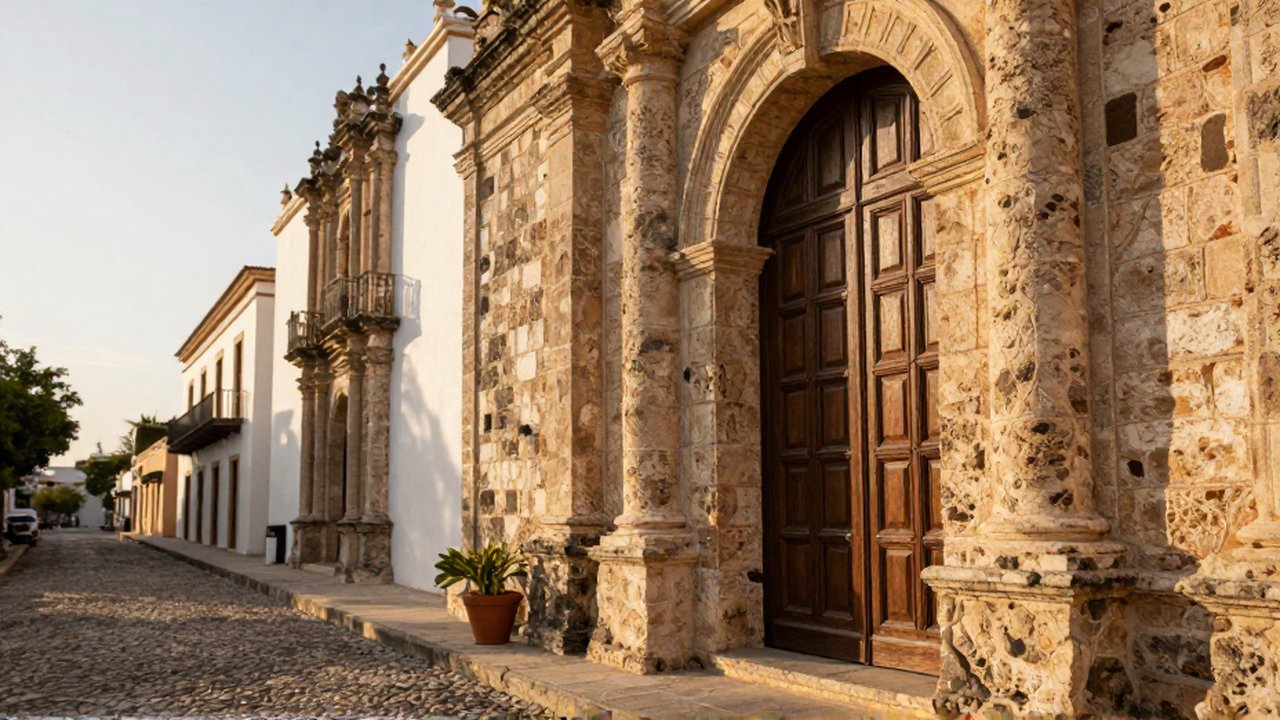
- Baroque influences: The intricate, swirling patterns of the Baroque style were often adapted by local craftsmen, blending European grandeur with local sensibilities.
- Religious symbolism: The use of specific iconography became a central theme in many folk crafts, moving beyond purely functional objects to items of spiritual significance.
- Floral and geometric patterns: European textile patterns and architectural motifs were integrated into local pottery, woodwork, and embroidery, creating a distinct hybrid visual language.
Transformation of textile and ceramics traditions
The introduction of new fibers and glazing techniques revolutionized the way Dominican artisans approached textiles and ceramics. European settlers brought sheep and other livestock, which introduced wool into the artisanal repertoire. Furthermore, the arrival of specific weaving looms enabled the production of more complex fabric patterns and larger-scale textiles used for both clothing and home decor.
In the realm of ceramics, the arrival of European glazing techniques changed the utility and appearance of local clay work. While indigenous pottery often focused on unglazed, porous vessels for cooking and storage, the influence of European styles introduced the use of slips and glazes. This allowed for a greater variety of colors and a smoother finish, making ceramics more suitable for decorative display as well as functional use.
Comparison of pre-colonial and colonial craft influences

The following table outlines the broad shifts in craft production resulting from the colonial encounter:
| Craft Category | Pre-Colonial Focus | European-Influenced Shift |
|---|---|---|
| Woodworking | Organic shapes, utilitarian tools | Plumb lines, joinery, and ornamental carving |
| Ceramics | Porous clay, natural pigments | Glazed surfaces, decorative motifs |
| Textiles | Natural plant fibers, simple weaving | Wool, sophisticated looms, complex patterns |
| Metalwork | Limited use of stone and bone | Iron tools, decorative metal hardware |
Legacy of hybridity in modern Dominican crafts
The lasting impact of this historical period is not found in a complete replacement of local styles, but in the “Mestizaje” or blending of cultures. Modern Dominican folk crafts are often a dialogue between these historical layers. An artisan today may use a traditional Caribbean wood species but apply a carving technique that traces its lineage back to European baroque traditions.
This cultural blending ensures that Dominican crafts are not static relics of the past but living traditions. The resilience of these crafts lies in their ability to absorb foreign influences while maintaining a core identity that is unmistakably linked to the Caribbean landscape and its people.
Frequently Asked Questions
How did European settlement change the materials used in Dominican crafts? Settlement introduced new materials such as iron for tools, wool for textiles, and various glazes for ceramics, which complemented local materials like tropical hardwoods and indigenous clays.
Was indigenous craft completely lost after the arrival of Europeans? No, indigenous techniques were not lost but rather integrated with European methods. This resulted in a hybrid style where local materials and themes merged with European structures and tools.
What is the most visible European influence in Dominican folk art? Religious iconography and the Baroque style are among the most visible influences, particularly seen in the carving of religious figures and the intricate ornamental patterns in woodwork and metalwork.



Post Comment