What is the difference between Larimar and blue topaz

Introduction
When searching for a blue gemstone to complement a piece of jewelry, enthusiasts often find themselves choosing between Larimar and blue topaz. While both stones capture the essence of the ocean through their striking shades of azure, they belong to entirely different mineral families and possess distinct physical and cultural characteristics. Understanding these differences is essential for collectors, gift buyers, and those interested in the specific heritage of Dominican craftsmanship.
Choosing between these two stones is not merely a matter of personal taste, but an engagement with different geological histories. Larimar is a rare, natural phenomenon tied to a specific geographic location, whereas blue topaz is a widely available gemstone that often undergoes human-assisted enhancement. By examining their origins, composition, and appearance, you can make an informed decision that aligns with your appreciation for nature or your preference for classical brilliance.
Origin and geological formation
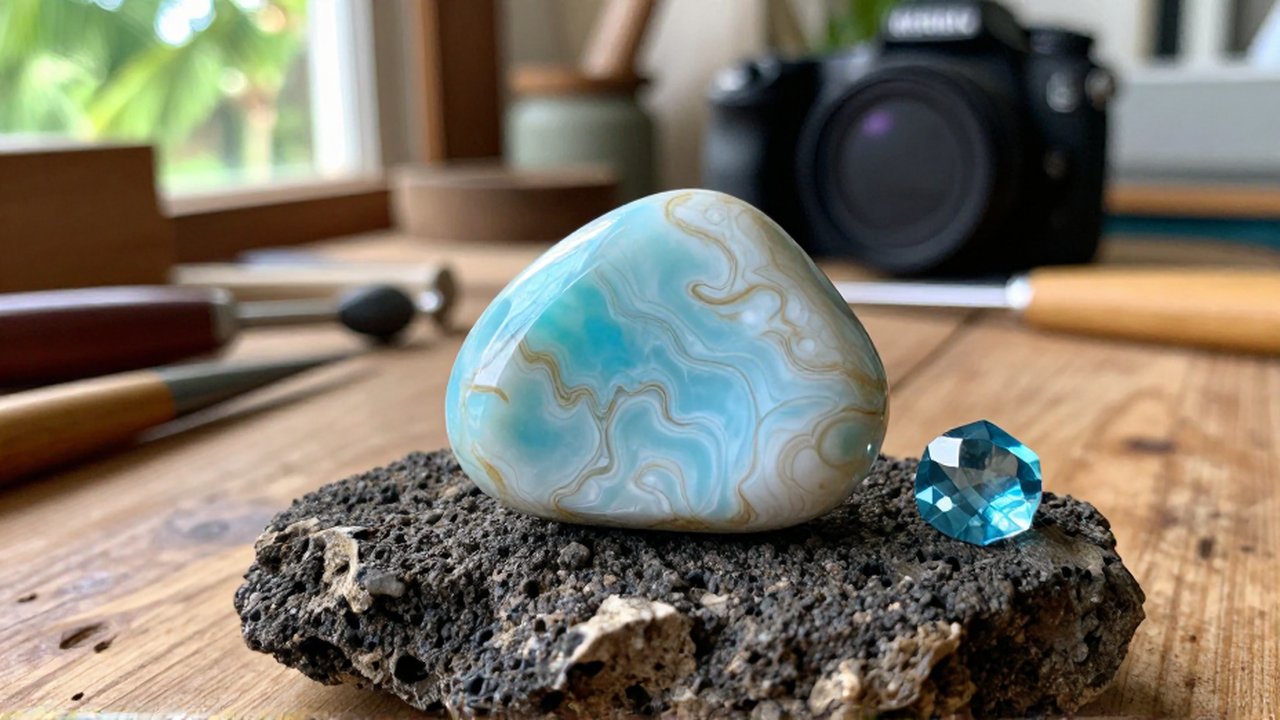
The primary difference between these two gemstones lies in where they come from and how they are created. Larimar is a rare variety of pectolite that is found only in one place on Earth: the Dominican Republic. It is formed within volcanic rock cavities, where the interaction of hydrothermal fluids and specific mineral concentrations creates its unique patterns. Because it is geographically restricted, Larimar is considered a national treasure of the Dominican Republic and a symbol of the island’s natural identity.
Blue topaz, on the other hand, is a variety of the mineral topaz that can be found in various parts of the world, including Brazil, Nigeria, and the United States. Unlike Larimar, which is extremely localized, topaz is a globally distributed mineral. Furthermore, it is important to note that most blue topaz seen in the market is actually colorless topaz that has been treated through irradiation and machine-tinting to achieve its blue hue. While natural blue topaz exists, the vast majority of commercial stones are enhanced to ensure a consistent, vibrant color.
Physical properties and appearance
The visual experience of wearing these stones is markedly different due to their chemical structures and light-reflective properties. Larimar is characterized by its “sun-dappled” or “oceanic” appearance. It typically features a soft, milky texture with patterns of white and light blue that mimic the movement of waves or sunlight filtering through tropical waters. It is an opaque or semi-translucent stone, meaning light does not pass through it with perfect clarity.
Blue topaz is a transparent gemstone known for its high brilliance and exceptional clarity. Because it is a single-crystal mineral, it can be cut into precise facets that reflect light with intense sparkle. While Larimar offers a calming, organic, and artistic aesthetic, blue topaz provides a classic, sharp, and high-luster look.
| Feature | Larimar | Blue Topaz |
|---|---|---|
| Mineral Type | Pectolite | Topaz |
| Clarity | Opaque to semi-translucent | Transparent |
| Color Pattern | Swirly, organic, wave-like | Uniform and consistent |
| Hardness (Mohs) | Approximately 3.5–4 | 8 |
| Rarity | Extremely high (localized) | Moderate to high (global) |
Durability and gemstone care
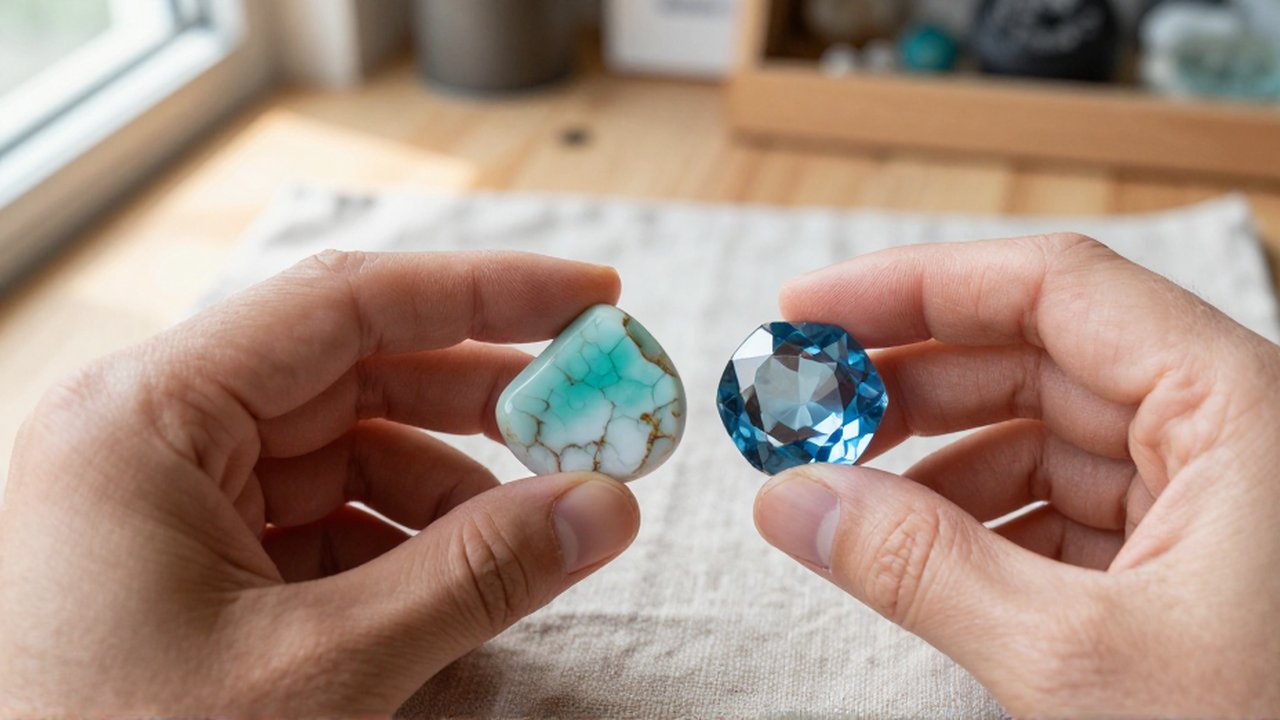
When deciding which stone is appropriate for different types of jewelry, hardness is a critical factor. The Mohs scale of mineral hardness is the standard used to measure a stone’s resistance to scratching. Larimar is a relatively soft gemstone, typically ranking between 3.5 and 4 on the scale. This makes it more susceptible to scratches and damage if worn daily in high-impact settings, such as rings. It is best suited for earrings, pendants, or bracelets where it is less likely to be bumped against hard surfaces.
Blue topaz is significantly harder, with a rating of 8 on the Mohs scale. This makes it much more durable and resilient to the wear and tear of daily life. It is an excellent choice for engagement rings or everyday rings. However, because many blue topaz stones are color-treated, they should be cleaned with mild soap and water rather than harsh ultrasonic cleaners or chemicals, which could potentially affect the color stability.
Selection criteria for buyers
Selecting the right stone depends on what you value most in a piece of jewelry. If you are looking for a piece that tells a story of a specific culture and a unique piece of the earth, Larimar is the superior choice. Every piece of Larimar is unique due to its irregular patterns, making it ideal for those who prefer one-of-a-kind, organic designs. It is a gemstone of connection, often chosen by those with a deep affinity for the Caribbean and the sea.
If your priority is brilliance, sparkle, and a traditional gemstone look, blue topaz is the better candidate. It is ideal for formal settings and classic jewelry designs where clarity and light refraction are the main attractions. Additionally, because blue topaz is more widely available and often more affordable in larger sizes, it is a practical choice for those wanting a significant visual impact without the premium price often associated with rare, natural stones like Larimar.
Frequently asked questions
Is Larimar more expensive than blue topaz? Generally, Larimar can be more expensive per carat because of its extreme rarity and limited geographic source. However, the price of blue topaz can vary significantly depending on whether it is a natural light shade or a heavily treated deep blue.
Can I wear Larimar every day? It is not recommended to wear Larimar in rings for daily use due to its softness. It is better to reserve Larimar for occasional wear in protective settings like pendants or earrings to prevent scratching.
Is blue topaz a natural stone? While topaz is a natural mineral, most blue topaz on the market is colorless topaz that has undergone a professional coloring process. Purely natural blue topaz is quite rare.
Which stone is better for a gift? Larimar is a deeply meaningful gift for someone who loves the ocean or has a connection to the Dominican Republic. Blue topaz is a classic, elegant choice for anyone who appreciates high-brilliance gemstones.



Post Comment